By Heather Giles, FRAMS Indigenous Student Museum Intern
Hello, Bonjour, Taanishi! My name is Heather Giles and I’m currently working towards a Bachelor of Arts at the Faculté Saint-Jean of the University of Alberta. I’m very grateful to participate in the FRAMS Indigenous Student Museum Internship this summer. As a Métis woman whose family has roots in Edmonton, Red River and the South Saskatchewan River Valley, I am passionate about Western Canada’s diverse history. For the past five years, much of my work experience has centred around public interpretation at Canadian historical and cultural sites, so I was eager to take up the opportunity to learn more about what goes on “behind the scenes” at a museum like the RAM.
For the past two months I have been working with the Military and Government History section of the RAM. Here, I have been working with the belongings of a man named William Edward Frame, including uniform pieces, photographs, documents and other memorabilia donated to the museum by his family.
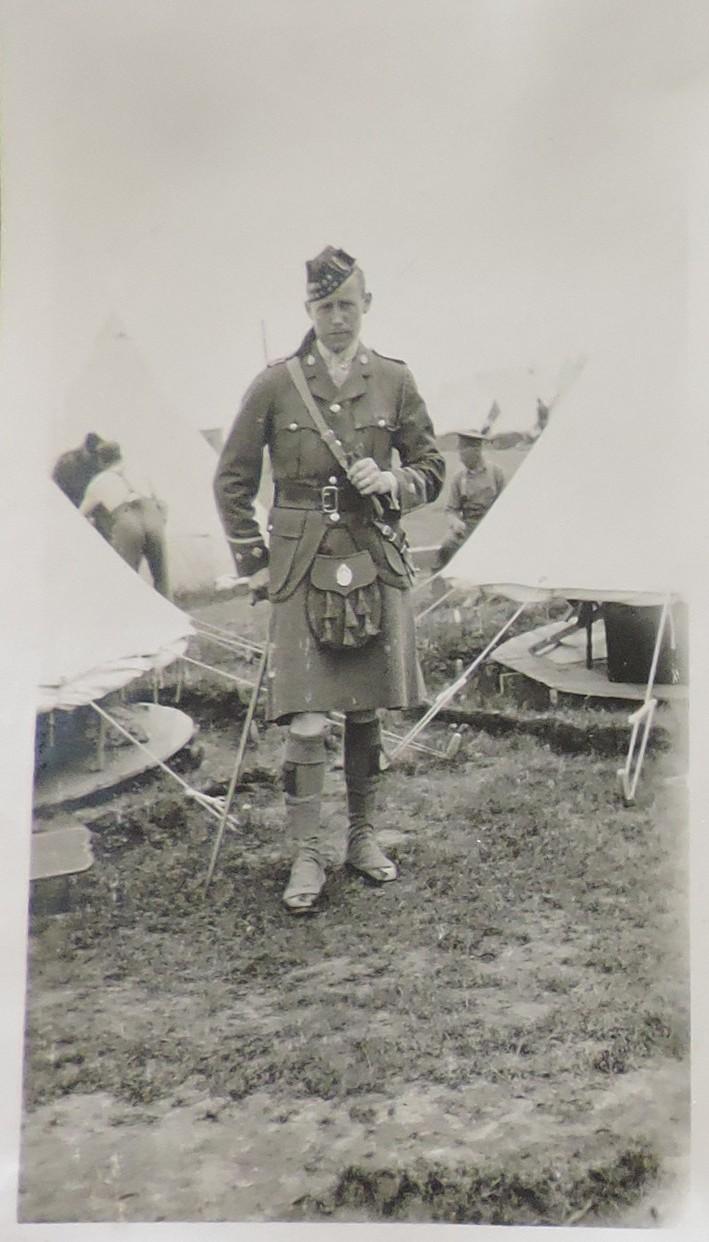
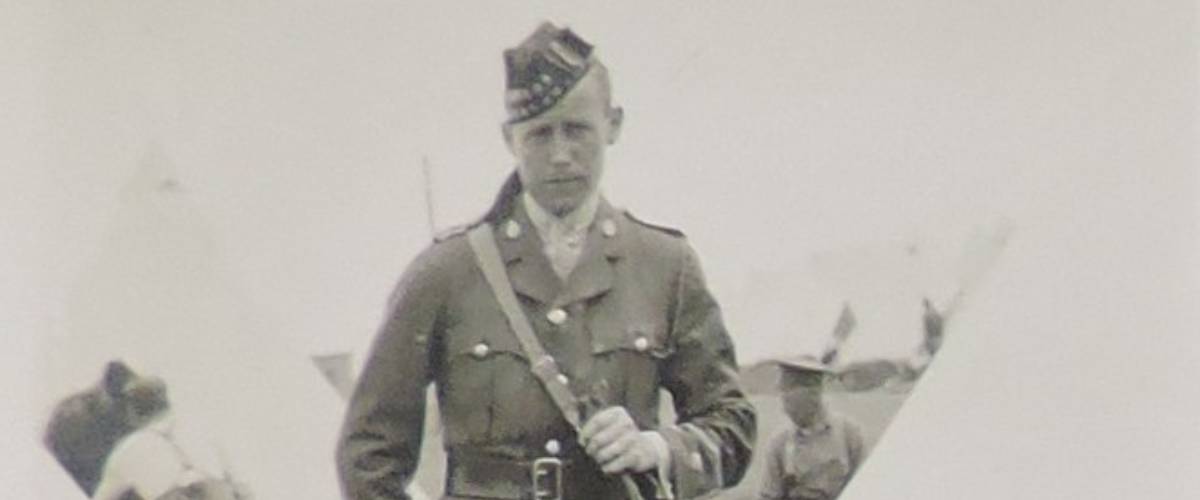
William Frame was born in Lethbridge, Alberta in 1892. He trained to become a teacher, and at the age of 23 was principal of Galbraith School in Lethbridge. In 1915, Frame enlisted for the First World War with the 113th Battalion (Lethbridge Highlanders), of the Canadian Expeditionary Force (CEF) as a lieutenant. He served overseas in England and in France with the 8th Canadian Machine Gun company and the 1st Canadian Motor Machine Gun Brigade. On September 2nd, 1918, Frame was wounded the battle of the Drocourt-Quéant line; he was shot above the knee and fractured his femur. He recovered due to care he received on the field and in hospital. For his service and courage, he was awarded the Military Cross at Buckingham Palace.
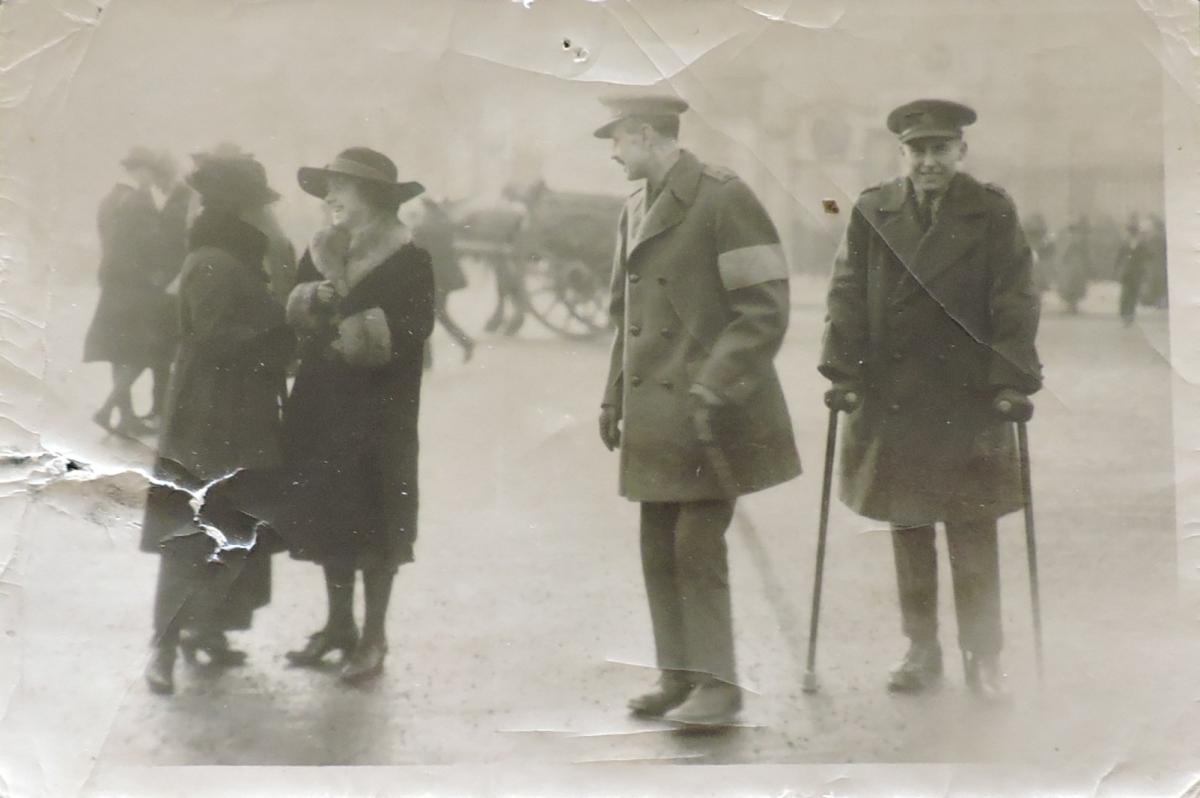
After he was discharged, Frame returned to Alberta and worked as a school inspector.
During the Second World War, William Frame re-enlisted with the Royal Canadian Ordnance Corps (RCOC) where he served as a captain and was later promoted to major. He remained in England for the duration of his service, where he trained troops and conducted administrative duties in the RCOC.
Frame returned to Alberta in 1944 to continue his work with the Alberta Department of Education as Chief Superintendent of Schools. He took on various roles concerning education across the province until his sudden death at the age of 67.
Learning who William Frame was through the belongings his family kept was a unique experience for me. Part of my work with this collection was cataloguing each item, by taking down descriptions, measurements, conditions, and any marks made on the objects. Each item was interesting in its own way, but the uniforms might have been my favourite items to catalogue. The pieces gave me a better idea of the man that once wore them. “FRAME” was handwritten in block letters on almost every article of clothing (and equipment). Wear and tear showed me how the garment had been worn, and split seams repaired by a hurried or less-experienced hand allowed me to imagine the life William Frame lived in these clothes. A real surprise, however, was rediscovering items left in the pockets of his Second World War uniforms. These items included: an empty envelope, an Officer’s Mess bill, two badges and two small plastic charms found in the right breast pockets of two of his battle dress jackets. One was a small pink fish tied to a green cord. The other was a small painted, Disney-style dwarf.
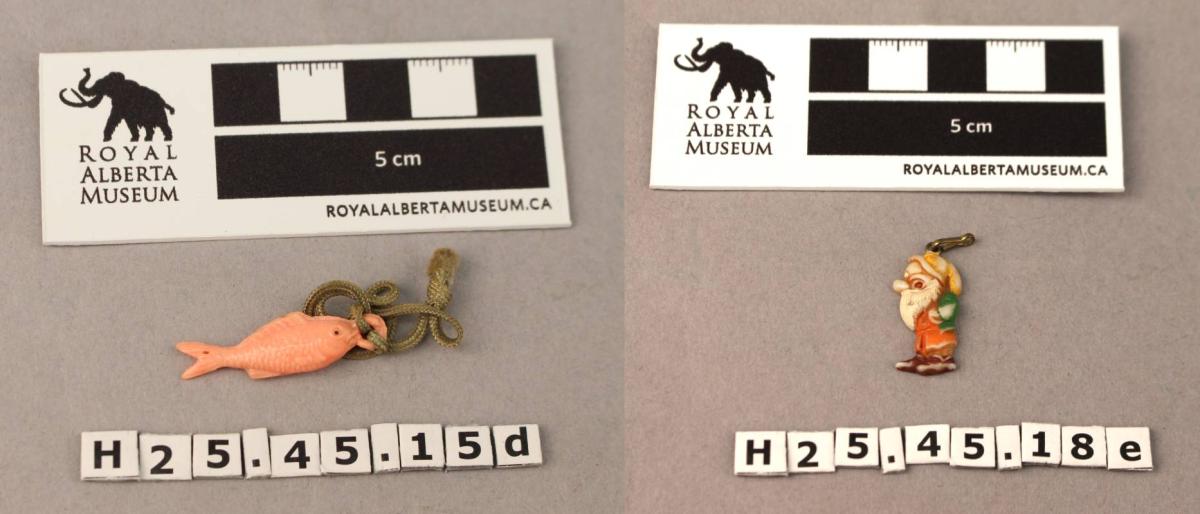
I found it endearing that Frame, a middle-aged army major, carried the little charms with him, and simultaneously amazing that they had stayed in his pockets possibly since the Second World War. Those little charms had me wondering where they came from? Why did he carry them? Were they for good luck? Were they given to him by his youngest daughter before he went overseas? I asked questions there would likely never be answers for. Though I had learned so much through his service files and newspaper clippings, it reminded me that objects and records do not always tell the whole story.
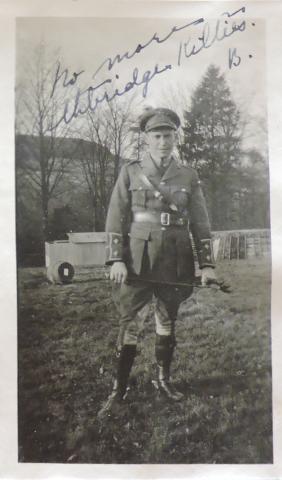
Luckily for me, this collection was accompanied by an interview from William Frame’s grandson. His stories showed me William Frame as a hard-working, career-focused man, who valued a job done right. Frame was humble and quiet about his military service but actively involved in his community. He was also deeply admired by his family for his wisdom and experience. Having family stories and personal accounts to accompany the items in this collection added another layer of emotional importance to their history beyond the dates, ranks and titles. Though the interview didn’t solve any mysteries about the charms or any other found items, it helped me see William Frame through his family’s eyes and the moments of pride, admiration, responsibility and sorrow which came from a life dedicated to the service of his nation, community and family.
Though my time with this collection is nearing its end, I have learnt a great deal from the process of bringing it all into the RAM’s catalogue. It has been an incredible opportunity to work with such interesting histories and artifacts, and I’m happy to have the chance to share my experiences with the readers of this blog post.